Subscribe to Our Podcast

SQUAWKING DEAD Podcast Links


Become a Patron!

Listen to the latest SQUAWKING DEAD Episode!

⬇⬇⬇Listen to the most recent episode!⬇⬇⬇


Why miss out? Subscribe to our blog via E-Mail!

Showing posts sorted by relevance for query "Lucy MacLean". Sort by date Show all posts

Wednesday, June 12, 2024

Fallout |1x05 "The Past"

⬇️Listen Now⬇️

⬆️Tap the above graphic⬆️
to listen to this episode
in your favorite Podcasts App


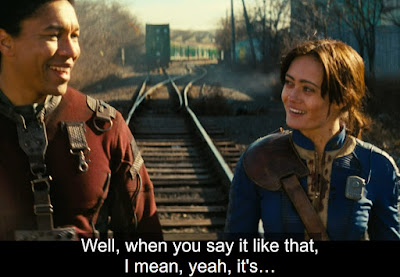
Maximus and Lucy MacLean learn to trust one another, while Betty Pearson (Cooper Howard's long-lost wife?) becomes Vault 33's overseer (obviously planned?). We explore Shady Sands' / New California Republic's lore, as well as Vault 4's, as it pertains to the games and how the TV series has expanded the Fallout Universe.
🎎A word of advice: tip us on Ko-fi or, for as little as $1 /month, join a membership tier on either Ko-fi or Patreon to receive the unedited episode recordings in advance of these releases. We had the raw and unfiltered version of this episode available for your streaming pleasure weeks ago, but unforeseen personal matters have taken precedence and we've lagged behind. It will most likely continue that way for our foreseeable recordings. As we also mentioned near the end of this episode, we could really use your support from here on in, so if you enjoy what we're doing and want to see what we're made of, be a part of something big by showing us some love!

David Cameo:
Rachael Burt:
Sherrandy Swift:

SPECIAL GUEST

Carinae Davey:

  • Speaking of The Past, Maximus' own flashback post the destruction of Shady Sands is a pivotal event in his origin story. Fallout may have started in 2077 but those who don't learn from history...

  • The New California Republic (NCR) and its capital, Shady Sands, were established by the residents of Vault 15 using a GECK (Garden of Eden Creation Kit) in 2198. It was the largest city created from scratch using no pre-apocalypse tech. It had a population of 3,000 in 2241 that grew, rapidly, to 35,000 by 2281. NCR reflects much of our American founding, both in ideal and early desires of expansionism (like all founding nations).

  • Lucy MacLean tells Maximus that The United States was established 320 years ago. If the year is presently 2296, that would pin America's founding in 1976; however, if Lucy is saying 320 years prior to the bombs dropping in 2077, that would place American independence in the year 1757. This is roughly during the time of the Seven Years/French Indian War and the siege of Fort William Henry. Maybe if George Washington had made better decisions, calling back to our coverage of The Walking Dead: The Ones Who Live, American history could've been fundamentally altered (then again, we would've ended up in the Fallout Universe, so sometimes mistakes are a good thing).
  • We ponder why societies tend to repeat the same patterns (as we did in our coverage of The Last of Us) and question whether the vaults were (experiments) engineered by corporations to create a captive consumer audience.
  • We take a break to show off Sherrandy's (mom's) latest crochet creation: a Vault-Boy. If you want your own (or any other character that comes to mind), start a commission! You can check out a few of her creations on @therealcrochetwitch (Instagram).

  • Different people have different ideas on how to save the world, leading to disagreements and conflicts. Expanding on the purpose of the vaults, The Enclave's purpose might've been an attempt at disrupting humanity's tendency to tilt towards liberty and self-determination. Also, enclave implies more than one entity, so we may be dealing with a concerted effort of multiple corporations besides Vault-Tec. This same effort might've nudged the world into what became the Fallout universe, using their endless Cold War cum Nuclear War as a smokescreen.
  • Shady Sands' devastation is larger than a mini-nuke but not as powerful as a full-scale nuclear campaign. On the note of mini-nukes, the weapon that uses mini-nukes as ammunition in the games is called The Fat Man, which is the same name given to the hydrogen bomb that fell on Hiroshima (Little Boy was the name of bomb that fell on Nagasaki).

  • Selective Memory: We touched on Maximus' recurring memory, emerging from the milk-bottle refrigerator and being saved by a knight of The Brotherhood of Steel, but we wanted go a little further on Lucy's own memory of her mother, Rose MacLean, and how she could've sworn she was with her on the surface (even though she logically knows that it must've been the Telesonic 3-D Projector making her feel as though she was). Still, could she have been outside with her mother and is she actually dead? Did they disappear her just like guests on The Truman Show?

  • The lack of a strong grieving response from the dwellers of Vault 33 after they were decimated by Lee Moldaver's raiders raises questions: is their docile nature might be a result of selective breeding/genetic manipulation? With the reveal that all the overseers of Vault 33 were transplants from Vault 31, along with the evidence of Vault 32's devastation being perhaps a result of its residents being exterminated for trying to break into Vault 31, it seems as though Vault 31 contains the answers to many of the series key mysteries! This fundamentally changes the way we previously perceived of Stephanie Harper (aka Fork-Eye Pregnant-Belly).

  • The significance of the two-headed Humboldt Honey bear on the New California Republic flag: Dave had recently listened to an episode of The Joe Rogan Experience (tapping this link will take you straight to this particular conversation, featuring Former Congresswoman and 2020 Presidential Candidate Tulsi Gabbard) in which they discuss how, in celebration of marijuana being removed from a the Drug Enforcement Agency's Schedule I Controlled Substances list, a controversy emerged after an organization of veterans gifted an American Flag made out of hemp to Congress. How this relates to our discussion is having also read an article whereby someone somehow donated the NCR flag, which looks extremely close to the actual California State Flag, to the California State Legislature. It was only later that the legislature found out about it.
    SDCC13 - New California Republic Flag
    Editor's Note: after trying really, really hard to find this news article - regarding the New California Republic flag gifted to the California State Legislature - and failing, the closest I could come to actually finding it again was this article talking about a group that wanted to California to secede from United States to form its own country, and even wanting to call it The New California Republic.
  • The humor in Fallout (and perhaps our own podcast episode) reaches its apex with the extremely subtle reference Norm MacLean and Chet drop - a way of concealing their Vault 32 sleuthing - by checking on the tatos, which is a reference to a hybrid potato and tomato plant in the games.

  • This episode gave us an opportunity to revisit whether we, as hosts/viewers, felt claustrophobia after Maximus was trapped in his Power Armor.

  • The possibility of Vault 31 being a cryovault: if all the overseers from Vault 32 & 33 came from Vault 31, then it's possible that these were people that were in suspended animation from before or right at the point of fallout who wanted to make sure the experiments in this cluster of vaults went according to plan.
  • The planned nature of overseer elections and the role of Betty Pearson: Betty Pearson is played by Leslie Uggams. Photos from the early days of Ms. Uggams career resemble Barbara Howard (Cooper Howard's wife). Seeing as though she was previously an overseer (of either Vault 31 or 32) and originally came from Vault 31 - like Stephanie - we can't help but perceive her suspiciously (whereas, before, we really liked her). If she actually is Cooper's wife, she definitely has an even larger role in the Fallout Universe.

  • Rachael appreciates both Maximus' and Squire Thaddeus' respective reactions: Thaddeus' desire to flee Maximus after hearing he killed Knight Titus and Maximus' readiness to kill Thaddeus after opening up to him - even though their mutual bond was predicated on Maximus impersonating Titus (especially after branding him). Maximus may have panicked and failed (a bunch of persuasion checks, due to lack of rizz) to explain the situation to Thaddeus, leading to their confrontation.

  • Maximus' lack of childhood memories prior to being picked up by The Brotherhood of Steel (after the explosion of Shady Sands) may have clouded his perceptions to their actual purpose in the wasteland. It's also established that their power armor is pre-war technology which (we officially discover in this episode) the Brotherhood uses to obtain more pre-war technology.

  • The existence of cannibals - called Fiends on the show - in the Fallout games and the symbolism behind Rink's resemblance to Lucy. Carinae thought Rink resembled a chem-addicted Raider (what fiends really are, not cannibals) in the games named Cricket.

  • It's quite possible that Maximus' knowledge on the wasteland is incomplete and The Brotherhood really doesn't know the original reason of why it does what it does. This brings us back to speaking about why societies tend to revert to imperfect systems that largely worked because, as Thomas Sowell once said, unintended consequences can arise from overregulation (whether immediately or down the line), and sometimes it's best to leave things the way they are rather than creating more complexity.
  • Vault 4 in the games, at least, is portrayed as a legendary vault that is rumored among wastelanders as a paradise, but turns out to be a dangerous hell infested with giant tarantula hawks/hornets called Cazadors. This is where Lucy & Maximus end up by the end of this episode. Are Lucy & Maximus safe, since someone obviously made Vault 4 the paradise it was believed to be, but had to be lured into it via a trap?

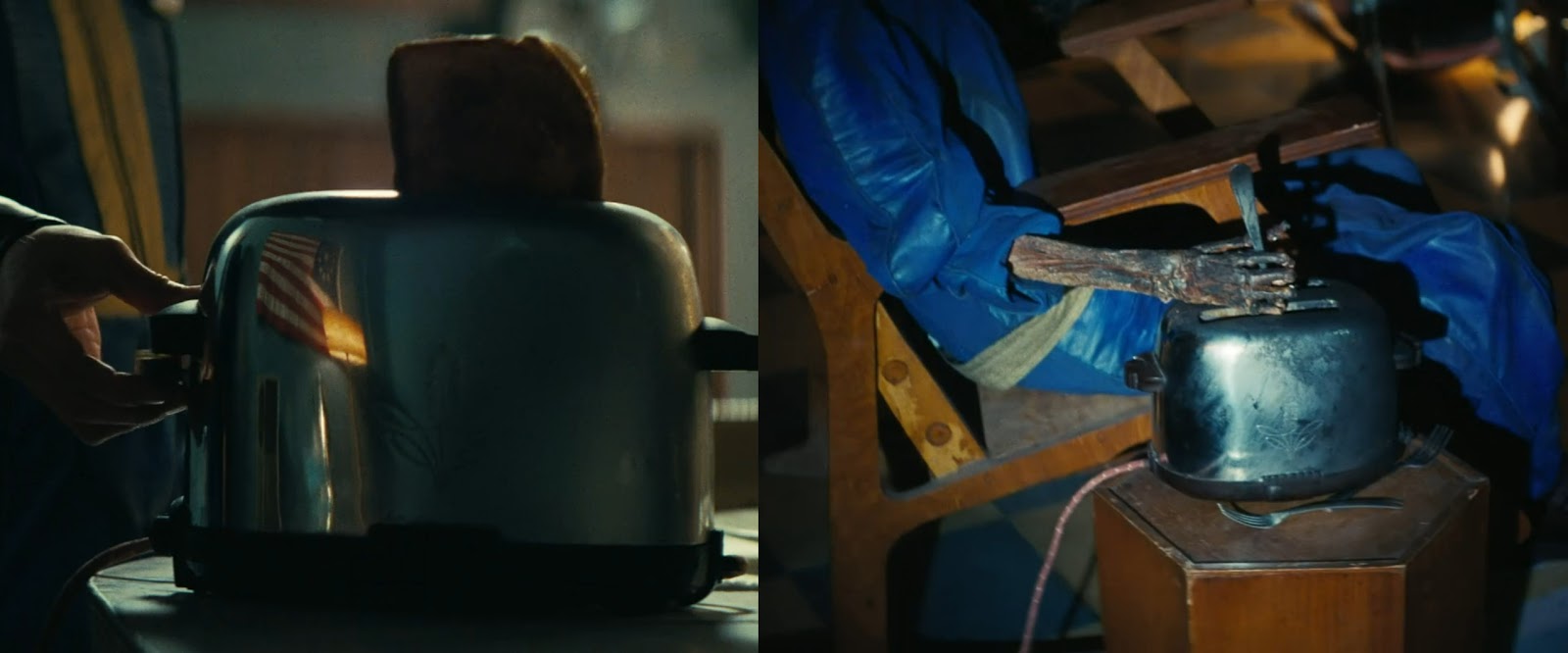
  • The presence of a cryolator (like a blowtorch, but ice) in Vault 32 suggests that their residents may have been bred differently than those in Vault 33. We also see yet another toaster (the same toaster, only fixed). The damaged overseer terminal in Vault 32, which was undamaged in the last episode (how Norm was able to determine that his mother's pip boy was used to access the outer vault door) indicates that Vault 31 intentionally covered up the origin of this vault's devastation and have been monitoring both vaults 31 & 32.


  • In addition to this, Rachael revisits her thoughts on how the residents of Vault 32 were actually killed. Dave suggests that, like all lab rats, they had to be put down but, like all cover-ups, they had to do it in such a way that it appeared as though they did it to themselves (by perhaps introducing a psychotic). Carinae compares this to the Reavers from the Firefly movie, Serenity, where the population of the planet Miranda were introduced to a drug that was meant to make them docile in an attempt to subjugate them. Most became so docile that they laid down and died, but a small fraction of the population, instead, became so aggressive and violent that they became the number one adversary in the series.
  • As always, we appreciate the impressive music, especially the 3 different renditions of Battle Hymn of the Republic, and end credit animations that seem to tease the next episode. This one seems to tease a textbook in a Shady Sands Elementary locker called The New California Republic with various check-out dates that end in Nov 2276 (just before Shady Sands' destruction). There's also a comic book poster of a pistol-toting, red-leather-jacket wearing hero that may be another Cooper Howard role.


🌟Like What We Do? Buy Us a Coffee!🌟

Sunday, June 2, 2024

Fallout |1x04 "The Ghouls"

⬇️Listen Now⬇️

⬆️Tap the above graphic⬆️
to listen to this episode
in your favorite Podcasts App


SQUAWKing down a couple rabbit holes: we uncover more evidence that Vault-Tec's cluster of vaults - 31, 32, and 33 - are merely a science experiment. The Enclave? Merely Vault-tec rebranded. On top of an immediate Season 2 announcement, will we at least get an announcement that Bethesda will be releasing a new game based, in part, on the events of Amazon Prime's knockout season?
🎎A word of advice: tip us on Ko-fi or, for as little as $1 /month, join a membership tier on either Ko-fi or Patreon to receive the unedited episode recordings in advance of these premieres. We had the raw and unfiltered version of this episode available for your streaming pleasure a while ago, but unforeseen personal matters have taken precedence and we're behind on our episode releases. It will most likely continue that way for the next few recordings. As we also mentioned near the end of this episode, we could really use your support from here on in, so if you enjoy what we're doing and want to see what we're made of, be a part of something big and show your support!
David Cameo:
Rachael Burt:
Sherrandy Swift:
Bridget Mason-Gray:

SPECIAL GUEST

Carinae Davey:

  • The Ghoul may not be a zaddy (nor Norman Reedus/Daryl Dixon), but Cooper Howard/Walton Goggins certainly is. Perhaps Father Gabriel Stokes?
  • Grab our new merch store designs: SQUAWK-Tec yellow accent on blue background or blue accent on yellow background and our SQUAWKING Fallout logo designs!

  • On The Walking Dead Universe front, The Walking Dead: Daryl Dixon - The Book of Carol will have an early screening of it's season two premiere at NYC's Tribeca Film Festival on June 8th. Wild speculation on when the general public will receive the first episode of it's second season (perhaps Daddy Daryl's Day/Father's Day?).

    Editor's note: as of this blog, both Dave and Bridget
    (along with a handful of supporters) will be in attendance!

  • We speculate on the reasons why ghouls might survive a little longer by eating their own kind and why/how normal folks become ghouls after the bombs fall. It's also possible that The Ghoul's serum is Horse Tranquilizers.
  • Cooper Howard is not a traditional protagonist and his actions are shaped by the harsh realities of the wasteland and what is shaping up to be a tragic past, pre-nuclear apocalypse. Had we not received the opening scene with he and his daughter escaping the the initial nuclear explosions, we might not have seen him as a protagonist at all. Survival and loss of humanity has shaped him into what he is, today. Watching his pre-apocalypse self at the end was a lot more like the pre-apocalypse version of him judging who he is today (feo, definitely, fuerte, maybe, but formal, definitely not).

  • The Ghoul is dragging Lucy MacLean down what appears to be a star-spangled path, indicating the type of hyper-nationalistic society pre-apocalypse America used to appear. Alogn with the touch of MacCarthyism we've seen in the previous episodes, we get a bigger picture of what lead to the fall.

  • Cooper's character development and choices are complex and thought-provoking, especially in relation to the way he put down Roger before he went feral, but then subsequently made ass-jerky out of him in order to survive. Ghouls are what Walkers might be like if you didn't have to die to turn (and it took, potentially, decades to go feral). Also, what if Cooper allowed himself to be studied (while in hibernation mode) so that scientists could discover the properties of what makes ghouls live longer without having to ghoul-out?
  • Were the Pip-Boys the cause of death of the residents of Vault 32, two years prior, since they died mid-riot? The inter-vault communication system containing information on interval trade, plus the video of  the population experiment on rodents playing on loop, helps Norm MacLean & Chet get answers.
  • If basically everything is nuclear-powered in this universe (Pip-Boys? Mr. Handy/Snip-Snip?), could a(n intentionally forced) collapse infrastructure lead to the explosions seen at the start of the first episode, rather than an actual nuclear warhead? What if the first-mover was Vault-Tec?
  • The presence of Lee Moldaver's Raiders in Vault 32 raises questions about their motives and possible involvement, if any at all. According to inter-vault communications, messages were sent as late as a year ago (excluding Lucy's inter-vault marriage proposal, just recently). If these residents died 2 years prior, was it the raiders who sent those messages or was it someone else?
  • Each vault in the Fallout universe has unique features and designs, which breeds potential for interconnected vaults (like we see in this series, via vaults 31, 32, and 33). Carinae informs us, however, that just as every vault in the Fallout universe has its own quirks, they were equally built to serve a(n often nefarious) purpose. And, small side-note, Cooper seems to recall Lucy's last name, MacLean: it's possible that we may see his pre-apocalypse self bump into one of her ancestors (who may have been involved, somehow, with Vault-Tec?).


  • Video games and TV shows can inspire each other, but the execution of such projects can be challenging: Fallout does an incredible job of not only accomplishing this but further expanding the lore in the games. The bottom line: what if the television series was not only a way of adapting the games to a new medium like television, but a built-in advertisement for not only Bethesda Games Studios' existing games but a brand new game that is presently in the works? This reminds Bridget of Defiance's adaptation to a video game whose mechanics changed based on the events of the show.


  • The "death" of Rose MacLean: Lucy's mother's voice echoing the words, What are you doing out here? during a memory she has while coming out of sedation is an intriguing mystery that we'll hopefully see uncovered in some form or fashion. She supposedly dies in the plague of 2277. Is Lucy starting to remember an important interaction with her mother that she might've suppressed? Dave also happens to think Rose resembles Alexa Nisenson who played Charlie on Fear The Walking Dead.

  • The conversation also touches on the nostalgia and familiarity of certain elements in Fallout, such as the sounds feral ghouls make and visual way in which the surgical instruments are displayed in the Super Duper Mart.


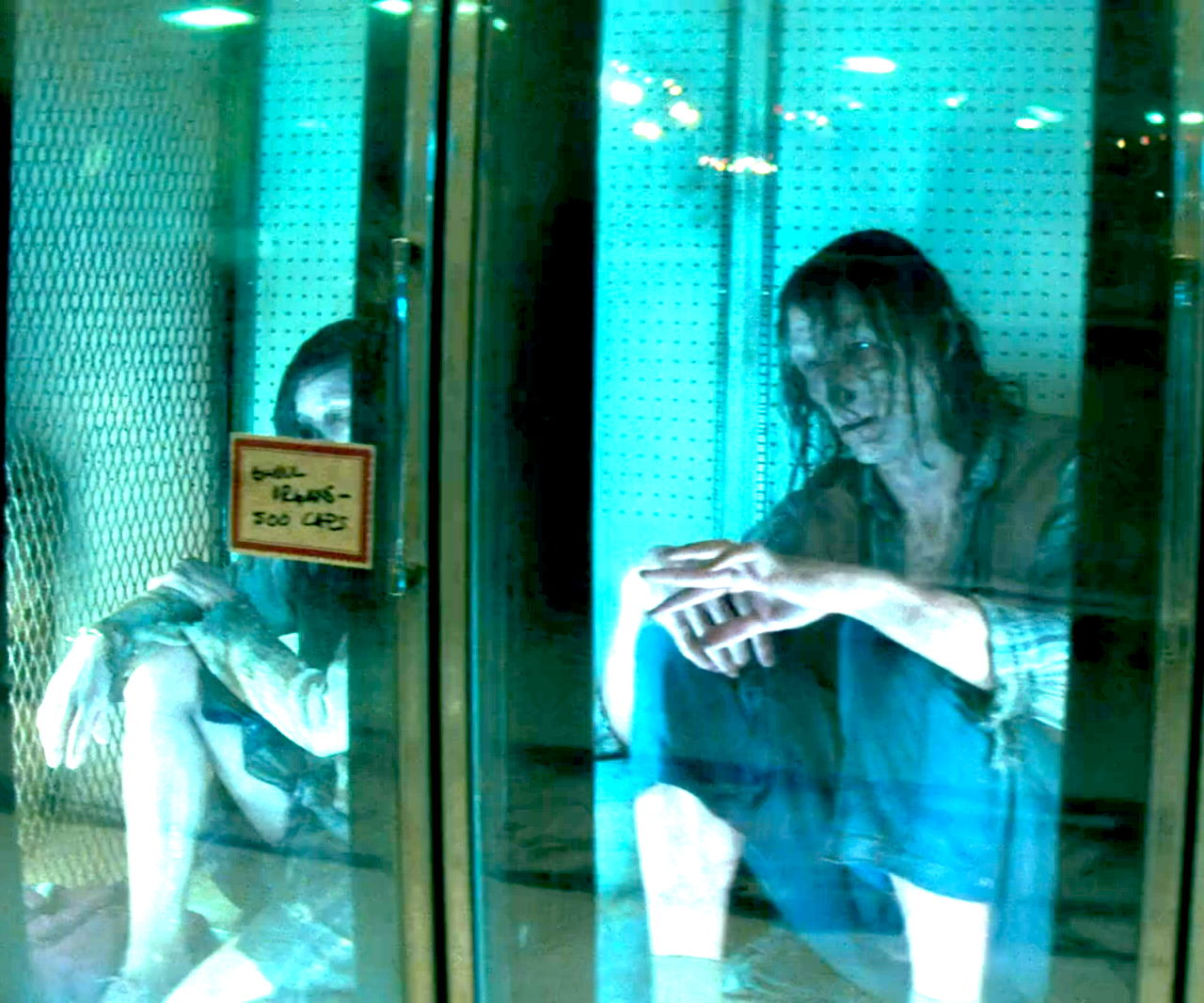
  • You might've missed the reason why ghouls were refrigerated in the first place and why there were different prices listed for them: replacement organs for ghouls (organs from feral ghouls are cheaper).


  • The portrayal of Mr. Handy, voiced by Matt Berry, further highlights the humorous foundation this television series (and the games) is built upon.
  • Mods, like Macho Man Randy Savage, in the Fallout and Elder Scrolls games allow for creative and humorous additions to the gameplay experience.

  • The attention to detail and fan service in the Fallout TV series is astounding and further highlights the dark humorous thread maintained in the games, like the unnaturally huge and wackily-worded Dairy Fresh Ice Cream billboard. There's also the matter of the health posters promoting chemicals and radiation as positives and the comically gaming-like presence of the green cross outside Westside Medical Clinic.

  • June is a busy month for TV shows we may or not plan on covering, including The Boys and House of the Dragon. We can certainly use your support to expand our repertoire!

🌟Like What We Do? Buy Us a Coffee!🌟

Friday, May 17, 2024

Fallout |1x02 "The Target"

⬇️Listen Now⬇️

⬆️Tap the above graphic⬆️
to listen to this episode
in your favorite Podcasts App


It seems as though all of our main characters are exhibiting aberrant behavior, stacked against the mission of their respective collectives. And Doctor Siggi Wilzig seems to know an awful lot about Lucy MacLean, doesn't he?
🎎A word of advice: tip us on Ko-fi or, for as little as $1 /month, join a membership tier on either Ko-fi or Patreon to receive the unedited episode recordings in advance of these premieres. We had the raw and unfiltered version of this episode available for your streaming pleasure weeks ago, but unforeseen personal matters have taken precedence and we're behind on our episode releases. It will most likely continue that way for the next few recordings. As we also mentioned near the end of this episode, we could really use your support from here on in, so if you enjoy what we're doing and want to see what we're made of, be a part of something big and show your support!

David Cameo:
Rachael Burt:
Sherrandy Swift:

SPECIAL GUEST

Carinae Davey:

  • The second episode of Amazon Prime's Fallout series moves the story forward as our protagonists actually engage one another (while introducing us to more characters).
  • This episode has game-like elements and pays attention to detail in set design.
  • The music and performances in the episode are praised by the hosts.
  • Filly is representative of the kinds of towns you see in the Fallout games. The "not so bright" dirt farmer played by Fear The Walking Dead alum, Michael Abbott Jr. (who played Isaac in FearTWD 6x01, The End is the Beginning), whom we meet outside of Filly is typical of the kind of wastelander you will meet in your travels.
  • Maximus's actions clearly prioritize his personal goals over the ideals of the Brotherhood.
  • His experience with the power armor, and Knight Titus' with the yaoguai, teaches him the limitations of his invincibility.
  • Ma June is played by Dale Dickey who you may have recognized from her roles as Patty Weezmer, the daytime hooker from My Name is Earl, and Spooge's lady, Skank, from Breaking Bad. The Chicken Molester is played by comedian John Daly. And, of course, Titus is played by - just above that guy status Michael Rapaport.
  • The interaction with the ghoul highlights the gray areas of morality, in opposition to Lucy MacLean's and Maximus' black and white (more or less) version of it.
  • The conversation explores themes of heroism, personal goals, and shades of morality... because chicken molestation in a comically violent world is the least of everyone's problems.
  • The violence and gore, specifically when Ma June attaches Wilzig's prosthesis, is over the top and comical, which is reminiscent of The Boys.
  • Stimpaks in the game can heal an insane amount of injuries (Lucy's and CX-404's stab wounds), but they cannot heal radiation damage.
  • The concept of eating unconventional food - like radroaches, dog meat, sting wing meat, bloatfly steaks, iguana, and lizard tails - is explored within the context of survival.

  • The show touches on ethical questions regarding the killing of animals and the genetic engineering of dogs.
  • Dr. Siggi Wilzig's blackboard hints at his experiments with genetic engineering and behavior modification. Every dog is perfect in its own way, but perfection is subjective.

  • Behavioral Engineering and Maxwell's Laws may be two different approaches to understanding and manipulating the world... or something else entirely, like the device Wilzig injected in his neck.

  • The desire for companionship and human connection is a fundamental aspect of being human, which might be another reason why The Ghoul / Cooper Howard takes in CX-404 (outside tracking Wilzig).
  • The concept of the norm is subjective and can vary depending on societal expectations. Lucy & Maximus may seem more or less normal to us, but not within their own society.
  • In a post-apocalyptic world, individuals must choose to adapt or die. It's evident by the presence of both stimpaks (the ability to heal from anything) and Plan-D (the most humane product Vault-Tec ever invented: essentially Euthanasia by way of banana-flavored cyanide).
  • Morality and decision-making can vary greatly depending on personal values and circumstances, such as Lucy choosing her syringer over the deadly weapons in Ma June's Sundries to engage The Ghoul.
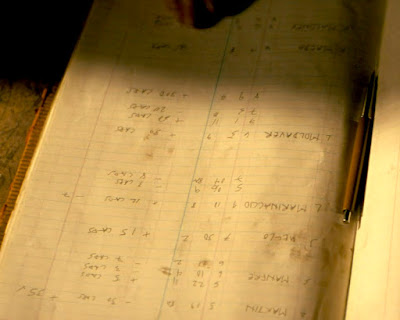
    Lee Moldaver's name, whom everyone knows, in Ma June's ledger

  • Fallout has visual callbacks to the games, like comic books and lunchboxes, that fans will appreciate and immerses newcomers into the universe.


  • The turret robot's purpose and its Dr. Wilzig's cartoony close call with it.
  • Speculation on the power source of the Pip-Boy and the Enclave's possible knowledge of the vaults.

  • The possibility that the vault dwellers are being monitored and used as science experiments.
  • The significance of the songs in the episode and their cultural impact.
  • The character development of Maximus and the exploration of his choices and identity is something many fans have a hard time enjoying because he's basically you: deluding yourself into thinking you're the hero of your own story. It reminds us of the very opening scene of Dispatches from Elsewhere.
  • Reflections on the lingering fear of nuclear warfare and the cultural impact of the Cold War.

  • The TV series includes various references and details from the Fallout games, such as the appearance of a super mutant and the use of laser rifles by guards.
  • The destroyed/deactivated Assaultron robot on the beach could've been a problem for Lucy.

  • The power armor's resistance to fall damage could've been featured in the show, which could've been true to the game's mechanics, had Maximus leveraged it in his fight with The Ghoul.
  • The remnants of a crashed Russian Chinese satellite hints at the scale of destruction and tragic origins of the Fallout universe.

  • The show balances a fun and cartoonish tone with the serious and intense nature of post-apocalyptic storytelling.
  • The hosts compare the show to other post-apocalyptic series like The Last of Us and The Walking Dead, noting the different approaches to violence and tone. Video games like Fallout and The Last of Us succeed by staying true to their genre and providing a mix of seriousness and levity. Adapting video games into other mediums, such as TV series, can be challenging due to the unique interactive nature of games.

🌟Like What We Do? Buy Us a Coffee!🌟